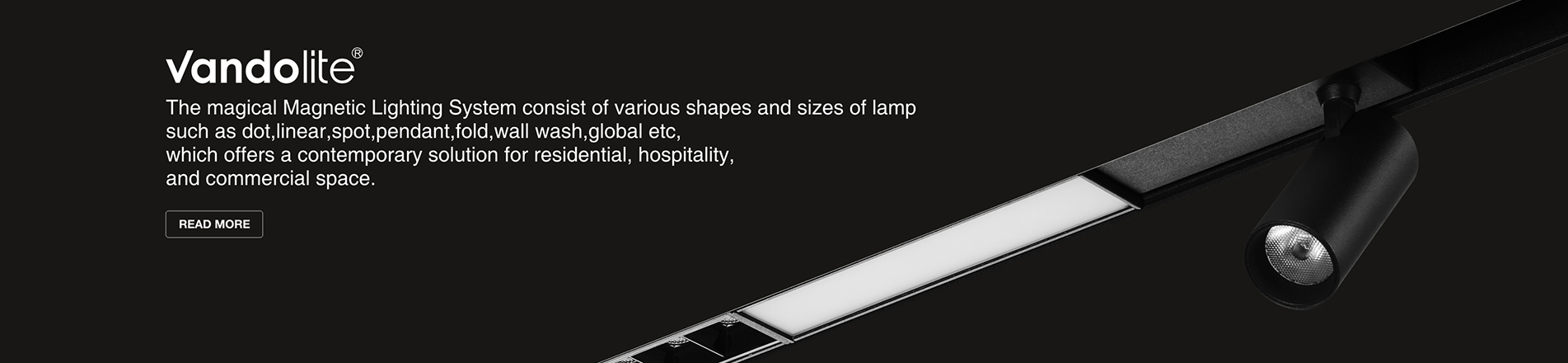
Magnetic track lighting has become a popular choice for modern residential, commercial, and hospitality projects because of its modular design and flexible lighting options. However, when selecting a magnetic lighting system, one important decision is often overlooked: choosing between a 24V and 48V system.
Although both solutions can support magnetic track fixtures, the difference in voltage affects the lighting design possibilities, control options, fixture development, and overall project planning.

Why Does Voltage Matter in Magnetic Track Lighting?
Many people consider voltage only as an electrical specification, but in a magnetic lighting system, it influences the entire design approach.
The operating voltage affects:
Choosing the right voltage at the beginning can help avoid limitations later during installation or future upgrades.
24V Magnetic Track Lighting: Flexible and Widely Used
24V magnetic track lighting is one of the most common solutions for interior lighting projects.
Because 24V systems are widely adopted, they offer a broad selection of compatible magnetic fixtures, including: spotlights, linear lights, pendant lights, wall washers, decorative modules.
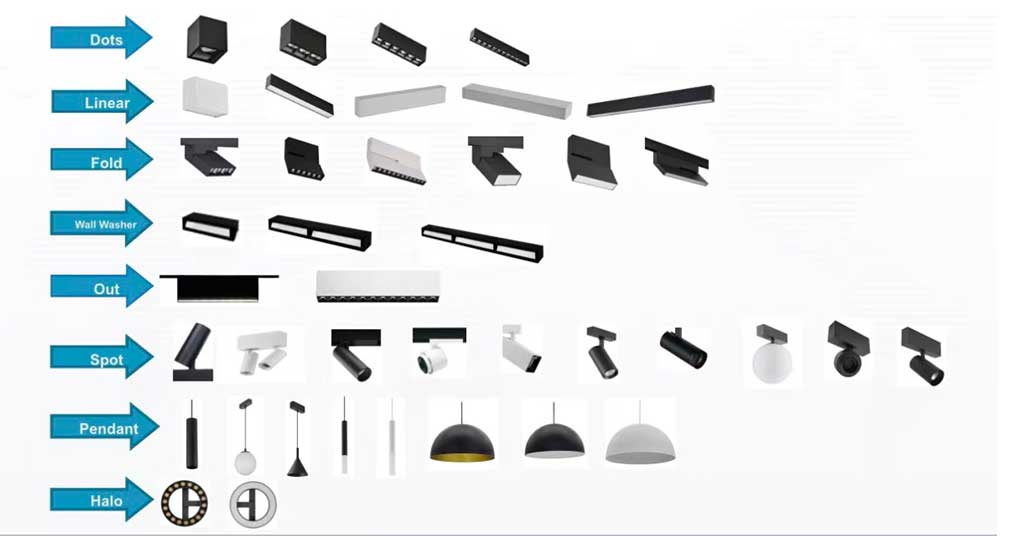
For many residential projects, retail spaces, and commercial interiors, 24V magnetic track lighting provides a practical balance between flexibility, fixture variety, and cost efficiency.
It is especially suitable when the project requires different lighting modules combined on the same track system.
48V Magnetic Track Lighting: Designed for Advanced Lighting Applications
48V magnetic track lighting is increasingly used in projects that require more advanced lighting functions.
Compared with traditional low-voltage systems, 48V solutions provide more possibilities for:
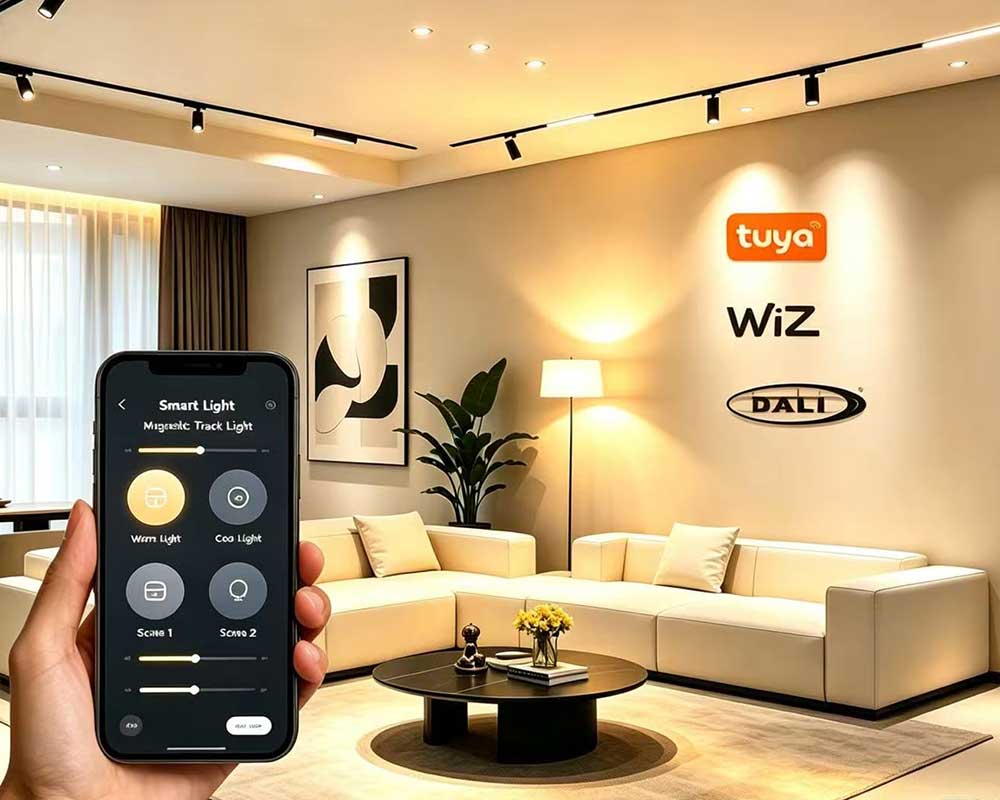
For example, a 48V magnetic lighting system can be combined with smart controls such as Tuya, DALI, or Zigbee to create adjustable lighting scenes and color temperature control.
This makes it suitable for projects where lighting is not only functional but also part of the overall user experience.
24V vs 48V Magnetic Track Lighting: Key Differences
| 24V Magnetic Track Lighting | 48V Magnetic Track Lighting | |
| Common applications | Residential, retail, commercial | Smart lighting, premium projects |
| Fixture compatibility | Wide range of standard modules | Suitable for advanced lighting modules |
| Control options | Standard dimming solutions | More possibilities for smart control |
| Design flexibility | Flexible | Higher potential for advanced designs |
| Project focus | Practical lighting solutions | Integrated lighting experience |
Which Voltage Is Better for a Project?
There is no single answer because the right choice depends on the project requirements.
A 24V magnetic track system may be a better choice when:
the project needs various standard fixtures
cost efficiency is important
conventional dimming is sufficient
the lighting design is relatively straightforward
A 48V magnetic track system may be more suitable when:
smart control is required
tunable white lighting is needed
the project focuses on architectural lighting design
future lighting upgrades are expected
The best solution is not determined only by voltage, but by the complete lighting system design.
How Does Voltage Affect Smart Magnetic Lighting?
Modern lighting projects increasingly require more than simple on and off control.
A smart magnetic lighting system may need to support:
For tunable white applications, a 48V magnetic track system can provide a suitable platform for integrating technologies such as:
This allows lighting to adapt to different environments, from warm residential atmospheres to brighter commercial settings.
How Should Designers Choose Between 24V and 48V?
Before selecting a magnetic track lighting system, designers should consider:
Project Type
Residential spaces may prioritize simplicity and flexibility, while hotels, offices, and commercial projects may require more advanced control.
Lighting Requirements
A project focused on basic illumination may not require the additional capabilities of a 48V system. However, projects requiring dynamic lighting effects may benefit from a more advanced solution.
Future Expansion
A lighting system should not only meet current requirements but also consider possible future changes, such as adding smart controls or changing lighting scenes.
Can 24V and 48V Magnetic Track Lighting Use the Same Fixtures?
Generally, magnetic track systems are designed around specific electrical configurations. Fixtures, tracks, and drivers need to be matched according to the same system requirements.
Before combining components, it is important to confirm compatibility between: track voltage, fixture voltage, driver output, control system
Using matched components ensures reliable performance and proper operation.
FAQ
Is 48V magnetic track lighting brighter than 24V magnetic track lighting?
Not necessarily. Brightness depends on factors such as LED power, optical design, fixture efficiency, and lighting distribution. Voltage itself does not determine brightness.
Is 48V magnetic track lighting safer than 24V?
Both 24V and 48V systems are low-voltage lighting solutions. The overall safety depends on the complete system design, including the driver, installation, and certification requirements.
Can 48V magnetic track lighting support color changing?
48V magnetic track lighting can support advanced lighting functions such as tunable white when paired with compatible fixtures, drivers, and control systems.
Which voltage is better for commercial projects?
Both can be used for commercial projects. The better choice depends on the required lighting functions, control system, project size, and design goals.
Can a magnetic track lighting system be upgraded from 24V to 48V?
Usually, 24V and 48V systems require different compatible components. A voltage change normally requires reviewing the track, fixtures, drivers, and control system.


 IPv6 network supported